TMJ Physiotherapy in Burnaby
TMJ Physiotherapy relieves jaw pain, headaches, and restricted movement through specialized manual therapy and therapeutic exercise. Our certified physiotherapists combine intraoral techniques, cervical spine treatment, and targeted jaw mobilization to address temporomandibular joint dysfunction affecting thousands of Vancouver professionals. This evidence-based TMJ treatment restores normal jaw opening, eliminates muscle tension, and transforms chronic orofacial pain into comfortable daily function.
- ✓Insurance covered treatment
- ✓Assessment and treatment in one visit
- ✓Same day booking available
What TMJ physiotherapy is
TMJ Physiotherapy is a specialized treatment approach that addresses pain and dysfunction in the temporomandibular joint through targeted manual therapy, therapeutic exercise, and movement retraining. This clinical intervention focuses on restoring normal jaw movement, reducing muscle tension in the face and neck, and improving the relationship between the jaw, skull, and surrounding structures. Research shows that physical therapy can reduce TMJ pain by 40-60% within the first 6-8 weeks of treatment, making it a proven first-line intervention for jaw disorders.
TMJ physiotherapy combines hands-on manual therapy with tmj exercises that target the unique biomechanics of jaw function. Your treatment addresses not just the jaw itself but also the neck, posture, and breathing patterns that contribute to symptoms.
The goal of this treatment goes beyond temporary relief. Your physiotherapist works to identify and address the underlying movement patterns, muscle imbalances, and joint restrictions that perpetuate TMJ dysfunction. Through a combination of manual therapy techniques, education, and progressive rehabilitation, you'll develop the tools to manage symptoms long-term and prevent future flare-ups.
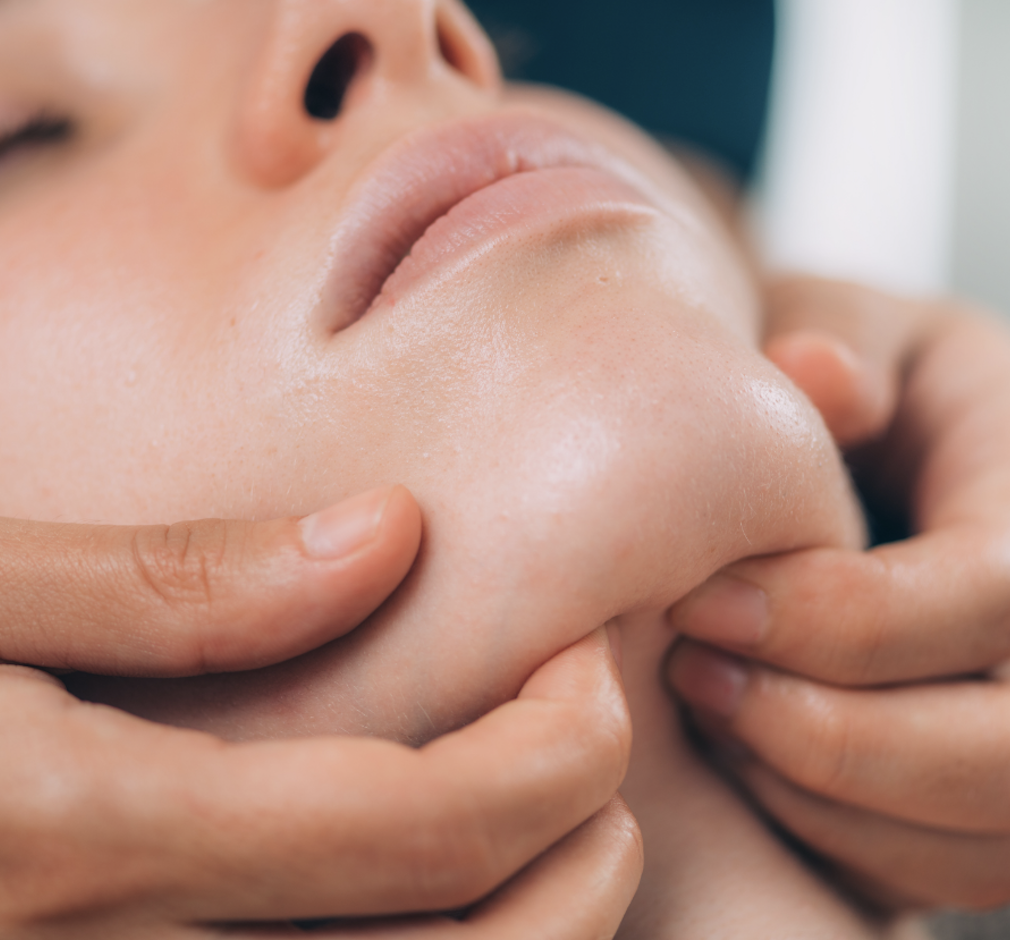
When the jaw is the source
If you've noticed clicking, popping, or grinding sounds when you open your mouth to eat or speak, you're experiencing one of the most common symptoms of TMJ . Many people in BC live with these symptoms for months or years before seeking treatment, assuming jaw problems will resolve on their own. However, early intervention with physiotherapy significantly improves outcomes and prevents the progression to more severe disorders. TMJ physiotherapy becomes essential when jaw symptoms begin to interfere with daily activities or persist beyond a few weeks.
Neck and jaw together
Neck tightness and jaw pain that flare together, because they share nerve supply and muscles.
Limited jaw opening
A jaw that will not open fully, locks, or deviates to one side as it moves.
Ear pain and fullness
Aching or blocked ears with nothing found on examination, a common referral pattern from the joint.
Clenching and grinding
Waking with a tight jaw or worn teeth, often flagged by your dentist before you noticed it.
Headaches from the jaw
Headaches through the temples that track back to jaw muscles rather than starting in the head.
Jaw pain and clicking
Pain at the joint, catching or clicking on opening, and chewing that has become something you think about.
Your first TMJ visit, step by step
What the assessment covers, what the treatment feels like, and what you are asked to do between visits.
History and examination
You go through how long it has been going on, what sets it off, whether you clench or grind, and any dental work. Your physiotherapist then examines how far the jaw opens, how it tracks, where it is tender, and screens the neck.
First treatment
Treatment begins in the same visit. Usually graded mobilisation of the joint and soft tissue work on the muscles that close the jaw, with the neck treated where it is contributing.
Intraoral work where appropriate
Several of the muscles that drive jaw pain can only be reached from inside the mouth. Where that is the right call it is explained first, done gloved, and only with your consent.
Home programme and review
You leave with jaw exercise and the habits worth changing, because that is what holds the change between visits. You also get a review point, so the course has an endpoint.
How we treat it
The science behind physiotherapy for jaw disorders centers on restoring proper biomechanics to the temporomandibular joint and surrounding structures. Your jaw operates through a complex interaction between the mandible, temporal bone, an articular disc, and over 20 muscles that control movement. When this system falls out of balance due to injury, poor posture, or repetitive strain, the muscles become overactive, the disc can shift position, and inflammation develops in the joint capsule. Evidence-based physiotherapy techniques address each of these components through precise manual interventions and movement retraining. The methods below are chosen after the assessment rather than applied as a package.
Exercise and habit change
Jaw control exercise, plus the daily habits like clenching and chewing that keep it irritated.
Joint mobilisation
Graded movement of the joint itself, to restore how far and how evenly the jaw opens.
Neck treatment
Treating the upper neck, which shares nerve supply with the jaw and often keeps symptoms going.
Soft tissue release
Work on the jaw, cheek and temple muscles that hold tension and refer pain elsewhere.
Our rates
Most extended health plans cover treatment here. Prices are subject to change.
TMJ (Jaw) - Initial
Targeted physiotherapy for temporomandibular joint dysfunction, jaw pain, and facial tension.
Book nowTMJ (Jaw) - Subsequent Treatment
Continues the hands on work and progresses your exercise as the jaw starts opening more evenly.
Book nowEverything else
specialised treatments.
Specialised treatments show the initial rate. Subsequent rates and the complete list of appointment types are on the rates page and when you book in Jane. Prices are subject to change.
Direct billing available with most major insurers

.svg.avif)










4.9 stars, 300+ reviews.
Your care team.
Book with whoever fits your schedule. Your notes follow you, so seeing a different practitioner does not mean starting again.
.avif)
Jeremy Chow
Physiotherapist
English
Combines manual therapy, soft tissue work, dry needling and exercise, built around what you are trying to get back to.
Book now →
Laurence Chin
Physiotherapist
English and Cantonese
Works with paddlers and runners, and with anyone who would rather understand their recovery than be handed a plan.
Book now →
Sing Ng
Physiotherapist
English and Mandarin
Focuses on headache and jaw pain, combining the Watson Headache protocol with manual therapy and clinical Pilates.
Book now →Why Choose us for TMJ Dysfunction Treatment
Our physiotherapists bring specialized training in TMJ rehabilitation and years of experience treating complex jaw disorders that haven't responded to standard approaches. We use evidence-based assessment protocols to identify the specific mechanical, muscular, and postural factors driving your symptoms, then design treatment plans that address your individual presentation rather than applying generic protocols.
Whether you're an office professional dealing with stress-related jaw clenching or an athlete managing post-injury TMJ pain, we customize your care to fit your lifestyle and goals. Book your TMJ assessment today and take the first step toward eating, speaking, and living without jaw pain limiting your daily activities.
 4.9 from 300+ reviews
Questions we hear most.
Are there any risks or side effects of TMJ physiotherapy?
The common one is soreness. The jaw and the muscles around it can ache for a day or two afterwards, much like after unfamiliar exercise, and it tends to lessen as treatment goes on.
Serious problems are rare. Your physiotherapist adjusts how firm the treatment is based on how you responded last time, so tell them if you were sore for longer than a couple of days.
How do I know if my jaw pain needs physiotherapy or dental treatment?
Physiotherapy treats the muscular and mechanical side: restricted movement, tender muscles, clicking, limited opening, and the posture and neck contribution.
Dentistry handles the structural side: bite problems, damaged teeth, and appliances such as a night guard.
Most jaw problems have some of both, which is why the two often run alongside each other. Your physiotherapist will tell you at the assessment if what you have needs a dentist rather than us, or as well as us.
Do I need a referral to see a physiotherapist for TMJ?
No. You can book directly with us.
Some extended health plans ask for a physician referral before they will reimburse you, so it is worth reading your plan wording first. If your dentist has already assessed you, bring what they told you, because it is useful to work from.
Why does my TMJ hurt more at night?
Because most clenching and grinding happens while you are asleep, so the muscles are loaded for hours with no break. Sleeping position adds to it, particularly on your side with the jaw pressed into the pillow.
Stress plays a part too. Tension you hold consciously through the day tends to come out once that control relaxes.
Treatment works on the muscles themselves, on sleeping position, and on the daytime habits that feed the night time load.
What to expect during your first TMJ physiotherapy treatment?
Plan for about an hour. Your physiotherapist assesses how the jaw moves, where the muscles are tender, how your bite sits and what your posture is doing, then asks about the triggers: desk work, stress, sleep, dental work.
Treatment starts in the same visit. That usually means gentle hands on work to settle the pain, an explanation of what is actually driving it, and a short home programme. Later sessions build on that as the joint starts moving better.
I already wear a night guard. Is this instead of that?
No, they do different jobs. A guard protects your teeth from the force of grinding. Physiotherapy works on the joint and the muscles producing that force.
Most people who have been given a guard keep wearing it alongside treatment. Tell your physiotherapist you have one, since it changes what they look for.
Will the clicking go away?
Sometimes, and anyone who promises it is guessing. A jaw that clicks without pain is common and often does not need treating at all.
Where the clicking comes with pain, limited opening or locking, treatment is aimed at those. The noise itself sometimes settles as the joint starts moving evenly again, but it is not what we measure success by.
How many sessions will I need?
You get an estimate at the end of the first assessment rather than an open ended plan. A jaw that has been painful for years usually takes longer than a recent flare.
There is a review point built in, and your physiotherapist will tell you if it is not responding rather than booking you in indefinitely.
Find us in North Burnaby.
Third floor of Akimbo, a short walk from Gilmore Station.
North Burnaby
Where4279 Dawson St #301, Burnaby, BC V5C 0N5
TransitShort walk from Gilmore Station
Emailhello@blvdwellness.ca
Phone(604) 364-1626
Get directions →Architect's render of Akimbo, the building we are in.
