ACL Surgery Recovery Time: A Stage-by-Stage Timeline
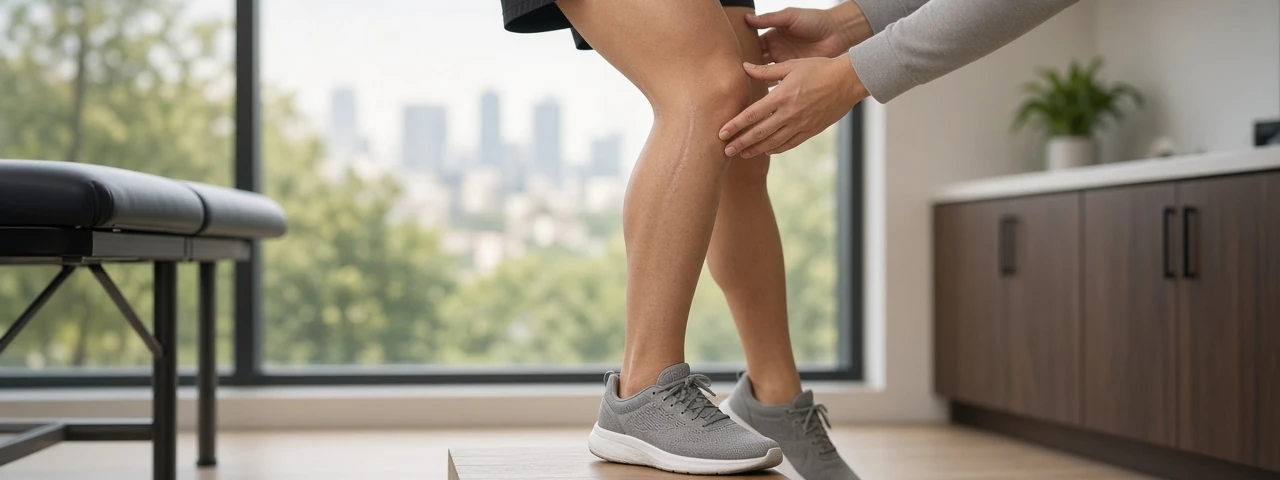
A physiotherapist explains what to expect in each stage after ACL reconstruction, and why return to sport depends on more than the calendar.
How long is ACL surgery recovery time? For most people, everyday activities return within a few months, while getting back to sports usually takes 6 to 12 months, and often 9 months or longer for sports with cutting and pivoting.
That range is wide for a reason. Recovery after ACL reconstruction is a series of stages, and you move forward when your knee is ready, not just when a date arrives. This guide walks through the typical ACL recovery timeline, from the first days after surgery to return to sport, so you know what to expect and what to work on.
In this article
- How long is ACL surgery recovery time?
- ACL recovery timeline at a glance
- The stages of ACL surgery recovery
- When can you walk, drive and go back to work?
- Why return to sport is based on criteria, not the calendar
- What affects your ACL recovery time?
- FAQ
- References
How Long Is ACL Surgery Recovery Time?
Full recovery from ACL surgery usually takes between 6 and 12 months. The NHS notes you can usually do most activities again within a few months, but it can take up to a year to play sport again.
The American Academy of Orthopaedic Surgeons (AAOS) says most patients return to full sports within 6 to 12 months, depending on their progress, strength and movement mechanics. A 2024 review describes a total rehabilitation period of around 9 months.
So the honest answer is: it depends on you, your knee and your goals. A desk worker who wants to hike will have a different finish line than a soccer player who wants to compete.
ACL Recovery Timeline at a Glance
Here is a general guide to the stages. Every surgeon and clinic has its own protocol, and these timeframes vary from person to person.
- Before surgery (prehab): Weeks before your operation. Main goals: settle swelling, full straightening, quadriceps strength.
- Early recovery: Weeks 0 to 2. Main goals: protect the knee, control swelling, straighten fully, switch on the quadriceps.
- Restoring movement: Weeks 2 to 6. Main goals: more knee bend, walk without crutches when cleared, basic strength.
- Building strength: Weeks 6 to 12. Main goals: progressive strength, balance, low-impact fitness.
- Running and jumping: Months 3 to 6. Main goals: return to running, hopping and landing drills.
- Return to sport: Months 6 to 12 (often 9+ for pivoting sports). Main goals: agility, cutting, sport-specific training, testing.
The Stages of ACL Surgery Recovery
Each stage builds on the last. The goal is not to rush through them, but to meet the targets of each stage before adding more load.
Before surgery: prehab
Rehab can start before your operation. Prehab focuses on reducing swelling, getting your knee fully straight and building quadriceps strength, and there is emerging evidence that it helps recovery after surgery. Going into surgery with a calm, strong knee gives you a head start.
Weeks 0 to 2: early recovery
The first two weeks are about protecting the knee and calming it down. In the first 7 to 10 days, the focus is on keeping the wound clean, regaining the ability to fully straighten the knee and restoring quadriceps control.
Typical tasks in this stage:
- Icing and raising the leg to ease swelling
- Gentle knee bending and straightening exercises
- Quadriceps tightening and straight leg raises
- Walking with crutches or a brace, if your surgeon has given you them
A clinical practice guideline recommends starting active knee movement right after surgery and building up weight-bearing in the first week as tolerated, always following your surgeon's instructions.
Weeks 2 to 6: restoring movement
This stage is about getting your knee moving and your walking back to normal. Your physiotherapist will tell you when you can stop using crutches.
You will usually work on bending the knee further, walking without a limp, and simple strength and balance exercises such as mini squats, bridges and standing on one leg. Swelling that flares after activity is a sign to ease off a little.
Weeks 6 to 12: building strength
Once your knee moves well and swelling is under control, the focus shifts to strength. Exercise is considered the core of ACL rehabilitation, so this is where much of the hard work happens.
Expect progressive leg strengthening, single-leg control work and low-impact fitness. NHS Fife's patient guide suggests cycling and swimming are usually possible after about 8 weeks.
Months 3 to 6: running and jumping
When your strength and control are good enough, you can start a return-to-running program. NHS Fife suggests jogging usually begins after about 4 months, with jumping, hopping and changing direction usually after about 6 months.
This is also the stage where many people feel "almost normal" and are tempted to do too much. The graft and the muscles around it still need time and gradual loading.
Months 6 to 12: return to sport
The last stage prepares you for the speed and unpredictability of sport: cutting, pivoting, reacting and contact. Training becomes sport-specific, and your physiotherapist and surgeon will check whether you meet return-to-sport criteria before you go back to full play.
Want help building your plan for each stage? A physiotherapist can assess your knee and set clear goals for where you are now.
When Can You Walk, Drive and Go Back to Work?
Most people are back to desk-based work within about 4 to 6 weeks, while heavy physical labour usually takes around 3 months. Your exact timing depends on your job and how your knee is responding.
- Walking: you will walk with crutches at first and stop when your physiotherapist says you are ready.
- Driving: you need to be off strong pain medicine, able to bear weight comfortably and have enough leg control to brake safely. After right knee surgery, this can take up to 6 weeks. Check with your surgeon and insurer before you drive.
- Work: the NHS says to return when you feel ready, usually after about 4 to 6 weeks, depending on the type of work you do. Working from home may allow an earlier start.
Why Return to Sport Is Based on Criteria, Not the Calendar
Return to sport after ACL surgery should be based on how your knee performs, not only on how much time has passed. AAOS lists the main requirements: no pain or swelling, full knee range of motion, fully restored strength and endurance, and restored balance and control of the leg.
Time still matters too. In the Delaware-Oslo ACL cohort study of 106 people who played pivoting sports, the reinjury rate fell by 51% for each month return to sport was delayed, up to 9 months after surgery. More even quadriceps strength between legs before returning was also linked to fewer reinjuries.
That is why many clinicians use a combination of time and testing. Common return-to-sport checks include:
- Quadriceps and hamstring strength compared with your other leg
- Single-leg hop tests
- Agility and sport-specific drills
- Questionnaires about knee function and confidence
There is no single agreed test battery, and a 2023 guideline notes the evidence on exactly which criteria to use is still limited. A good rehab plan uses several measures together, plus your surgeon's guidance.
What Affects Your ACL Recovery Time?
Recovery time varies with your age, general health and the details of your surgery. Factors that commonly change the timeline include:
- Other injuries treated at the same time. About half of ACL injuries happen with other knee injuries, such as meniscus tears, and these can change how much weight you are allowed to put through the leg early on.
- Graft type. Different grafts have different side effects; for example, pain at the front of the knee is common after a patellar tendon graft.
- Your sport or job. Cutting, pivoting and contact sports need a longer, more demanding final stage than cycling or swimming.
- Consistency with rehab. AAOS notes that much of the success of ACL surgery depends on dedication to physical therapy.
- Your starting point. Strength, swelling and knee movement before surgery can shape the early weeks, which is why prehab is worth considering.
What about ACL recovery without surgery?
Not every ACL tear needs surgery. Non-surgical management can be reasonable for some people, such as those with partial tears and no instability, or people who do not play pivoting or cutting sports. Recovery and rehab for a partial tear usually lasts at least 3 months. The right choice depends on your knee and your goals, so talk it through with your doctor or surgeon and physiotherapist. You can learn more about our approach to ACL physiotherapy and rehab, with or without surgery.
FAQ
How long does it take to walk normally after ACL surgery?
It varies from person to person. You will use crutches at first and stop when your physiotherapist says you are ready. How soon you walk normally depends on swelling, knee movement, quadriceps strength and any other injuries repaired during surgery.
When can I drive after ACL surgery?
You can usually drive once you are off strong pain medicine, can bear weight comfortably and have enough control to brake safely. After right knee surgery this can take up to 6 weeks. Check with your surgeon and your insurer first.
When can I go back to work after ACL surgery?
Many people return to desk work within about 4 to 6 weeks, sometimes sooner if they work from home. Jobs with heavy physical labour usually take around 3 months.
When can I start running after ACL surgery?
Running usually starts around 4 months after surgery, once your strength, swelling and knee control allow. Your physiotherapist should guide a gradual return-to-running program.
Is 6 months too early to return to sport after ACL surgery?
For cutting and pivoting sports, often yes. Research links returning before 9 months with a higher reinjury rate. The decision should be based on strength, hop and function testing plus your surgeon's advice, not the date alone.
How long will I need physiotherapy after ACL surgery?
Most people need rehab for several months, and the full program often runs around 9 months or longer if you are returning to sport. Visits are usually more frequent early on and spread out as you take on more of the program at home.
Book an ACL Rehab Assessment
Whether you are preparing for ACL surgery or working through recovery, our physiotherapists can assess your knee, set clear goals for each stage and guide you back to the activities you love. Visit our clinic in Burnaby, or learn more about physiotherapy at BLVD.
References
- Recovering from ACL (anterior cruciate ligament) surgery. NHS.
- ACL Injury: Does It Require Surgery? AAOS OrthoInfo, American Academy of Orthopaedic Surgeons.
- Anterior Cruciate Ligament (ACL) Surgical Reconstruction. NHS Fife.
- Clinical Practice Guideline on Rehabilitation after ACL Reconstruction. Aspetar Orthopaedic and Sports Medicine Hospital (published in British Journal of Sports Medicine), 2023.
- Simple decision rules reduce reinjury risk after anterior cruciate ligament reconstruction: the Delaware-Oslo ACL cohort study. British Journal of Sports Medicine, 2016.
- Return to Sports After Anterior Cruciate Ligament Reconstruction. The Permanente Journal, 2024.

Book your visit at BLVD
Physio, chiro, massage and acupuncture in Burnaby.
4279 Dawson St #301, Burnaby. 5 min walk from Gilmore Station.
