What Is a TENS Machine? Uses, Safety and Evidence
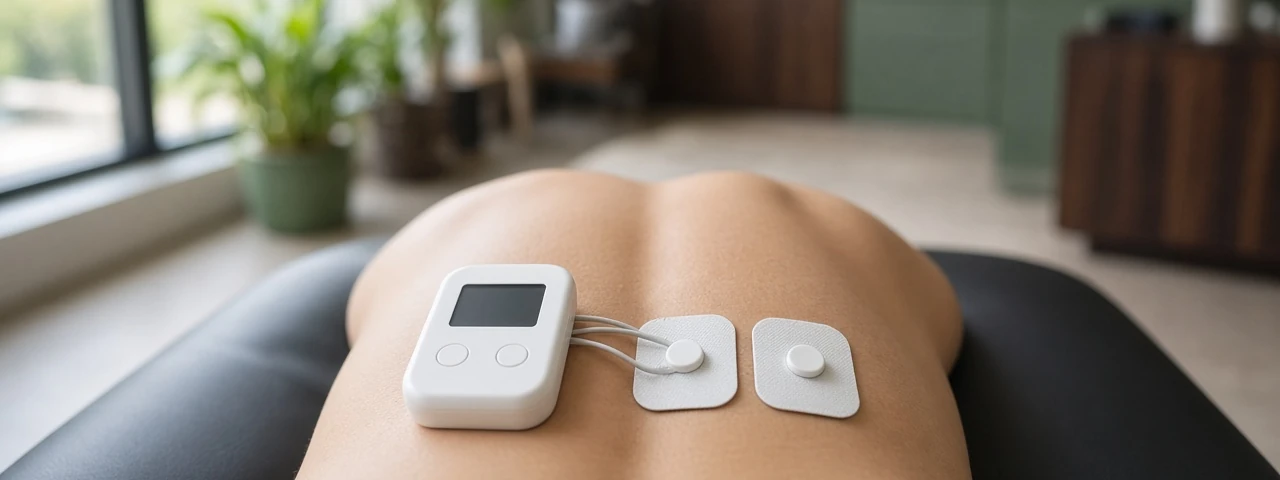
A plain-language guide to how TENS works, what the research says, who should avoid it and how to use one safely.
What is a TENS machine? A TENS machine is a small, battery-powered device that sends a mild electrical current through sticky pads on your skin to give temporary pain relief. TENS stands for transcutaneous electrical nerve stimulation, which simply means stimulating nerves through the skin.
TENS is drug-free and non-invasive, and you can buy a unit for home use. But it does not work for everyone, it is not suitable for some people, and it works best as part of a wider plan. This guide covers how it works, what it is used for, what the evidence shows and how to use one safely.
In this article
- How does a TENS machine work?
- What is a TENS machine used for?
- Does TENS actually work?
- Who should not use a TENS machine?
- How to use a TENS machine safely
- TENS vs EMS: what is the difference?
- TENS as part of physiotherapy
- FAQ
- References
How Does a TENS Machine Work?
A TENS machine delivers small electrical pulses through pads placed on the skin near the painful area. You feel the pulses as a tingling or buzzing sensation, which should be strong but comfortable, never painful.
A typical unit is about the size of a small phone. It connects by wires to adhesive pads, and you can usually adjust the intensity, frequency and length of the pulses.
Researchers are still working out exactly why TENS helps. There are two main theories:
- Blocking pain signals. The electrical pulses stimulate nerves in a way that reduces the pain messages travelling to your brain, changing how you perceive pain.
- Releasing endorphins. The pulses may prompt your body to release endorphins, its own natural pain-relieving chemicals.
Relief is usually felt during the session. For most people it fades within about an hour of switching the machine off, although some people report feeling better for longer.
What Is a TENS Machine Used For?
TENS is used to ease many kinds of short-term and long-term pain. Common uses include:
- Back pain
- Arthritis, including osteoarthritis
- Sports injuries
- Tendinitis and bursitis
- Period pain and endometriosis
- Labour pain
- Fibromyalgia
TENS treats pain, not the underlying cause. If you do not know why you are in pain, see a health professional before trying it, so a problem that needs other treatment is not missed.
Does TENS Actually Work?
TENS can reduce pain while it is being used for many people, but results vary and it is not a long-term fix on its own.
A large 2022 meta-analysis of 381 randomized controlled trials involving more than 24,000 adults, found that pain intensity was lower during or immediately after TENS than with a placebo device. The authors rated this as moderate-certainty evidence, partly because many of the trials were small. Side effects were poorly reported, but those described were generally mild.
Other evidence is more cautious. Some studies have found that placebo TENS works about as well, and results may depend on the condition, where the pads go and the settings used. In the UK, the National Institute for Health and Care Excellence (NICE) advises clinicians not to offer TENS for managing low back pain, with or without sciatica, or for chronic primary pain such as fibromyalgia.
The takeaway: TENS can be a useful short-term tool to take the edge off pain, especially if it helps you stay active. For ongoing problems, active treatment such as exercise usually matters more. If back pain is your main concern, read how physiotherapy for back pain can help.
Want to know whether TENS makes sense for your pain? A physiotherapist can assess the cause and show you where and how to use it.
Who Should Not Use a TENS Machine?
TENS is generally safe, but it is not right for everyone. Do not use TENS without first talking to your doctor (or midwife, if you are pregnant) if you:
- Have a pacemaker or another implanted electrical device
- Have epilepsy
- Are pregnant, unless your doctor or midwife has said it is okay (TENS is sometimes used for labour pain)
- Have heart disease
- Have a bleeding disorder or deep vein thrombosis (DVT)
- Have cancer
Where not to place the pads
Never place TENS pads on:
- Broken, irritated, infected or numb skin
- The front or sides of your neck
- Your head, mouth or eyes
- Your chest and back at the same time
- Varicose veins or the genitals
- Areas recently treated with radiation therapy
How to Use a TENS Machine Safely
Ask a physiotherapist or other health professional to show you where to place the pads and which settings to start with. Then follow these basics:
- Make sure the machine is switched off before you start.
- Place the pads on clean, healthy skin around the painful area, leaving a gap between them.
- Switch on and turn the intensity up slowly until you feel a strong but comfortable tingling.
- Use it for the time your health professional suggests. Some people use TENS several times a day for up to about an hour at a time.
Do not use a TENS machine while you are driving or operating machinery, in the bath or shower, or while you are asleep.
Side effects
Side effects are uncommon and usually mild. They can include skin irritation or an allergic reaction to the pad adhesive, an uncomfortable prickling feeling and, rarely, burns from the electrodes. Stop using it and speak to a health professional if your skin becomes red or sore, or if you feel dizzy or unwell.
TENS vs EMS: What Is the Difference?
TENS and EMS (electrical muscle stimulation, also called neuromuscular electrical stimulation or NMES) use similar technology for different goals.
- TENS targets the sensory nerves to reduce pain. At typical settings it does not make muscles contract noticeably.
- EMS uses stimulation designed to make muscles contract, and is mainly used in rehabilitation to help strengthen or retrain muscles.
Some home devices offer both modes. Check which mode you are using, and ask your physiotherapist which one, if either, suits your goal.
TENS as Part of Physiotherapy
TENS works best as one part of a treatment plan rather than the whole plan. In physiotherapy, it may be used to ease pain enough for you to move and exercise more comfortably, alongside hands-on treatment, a home exercise program and advice on activity. A physiotherapist can also advise on pad placement and settings so you can use TENS safely at home.
To learn more about how TENS fits into treatment, visit our TENS therapy page.
FAQ
What does a TENS machine feel like?
Most people feel a tingling, buzzing or pins-and-needles sensation under the pads. It should feel strong but comfortable. If it hurts, turn the intensity down.
How long does TENS pain relief last?
Relief is usually felt during use and, for most people, fades within about an hour of switching off. Some people report longer-lasting relief.
Can I use a TENS machine every day?
Many people do. Some use TENS several times a day for up to about an hour at a time. Check with a health professional about what is right for you, and stop if your skin becomes irritated.
Is a TENS machine safe?
For most people, yes, when used as directed. Serious side effects are rare. Avoid it if you have a pacemaker or epilepsy, and check with your doctor first if you are pregnant or have heart disease or another medical condition.
Does TENS help back pain?
It may ease back pain while you use it, but UK guidelines do not recommend TENS as a treatment for low back pain. Exercise-based care is usually the better long-term option.
Where should I put TENS pads?
Usually on healthy skin around the painful area, with a gap between the pads. Never on the front or sides of the neck, the head, or broken or numb skin. A physiotherapist can show you the best placement for your pain.
Book a Physiotherapy Assessment
If pain is stopping you from doing what you enjoy, our physiotherapists can find what is driving it and build a plan that fits you. Physiotherapists may use TENS alongside exercise and hands-on care where it helps. Visit us near Brentwood in Burnaby.
References
- TENS (transcutaneous electrical nerve stimulation). NHS, reviewed 2025.
- Transcutaneous electrical nerve stimulation (TENS). Cleveland Clinic, 2023.
- Efficacy and safety of transcutaneous electrical nerve stimulation (TENS) for acute and chronic pain in adults: a systematic review and meta-analysis of 381 studies (the meta-TENS study). Johnson MI, et al. BMJ Open, 2022.
- Low back pain and sciatica in over 16s: assessment and management (NG59). National Institute for Health and Care Excellence, 2016.
- Chronic pain (primary and secondary) in over 16s: assessment of all chronic pain and management of chronic primary pain (NG193). National Institute for Health and Care Excellence, 2021.
- Neuromuscular electrical stimulation for skeletal muscle function. Doucet BM, et al. Yale Journal of Biology and Medicine, 2012.
- Do electrical stimulation devices reduce pain and improve function? A comparative review. Pain and Therapy, 2023.

Book your visit at BLVD
Physio, chiro, massage and acupuncture in Burnaby.
4279 Dawson St #301, Burnaby. 5 min walk from Gilmore Station.
