What Is TMJ? Jaw Pain Symptoms, Causes and Treatment
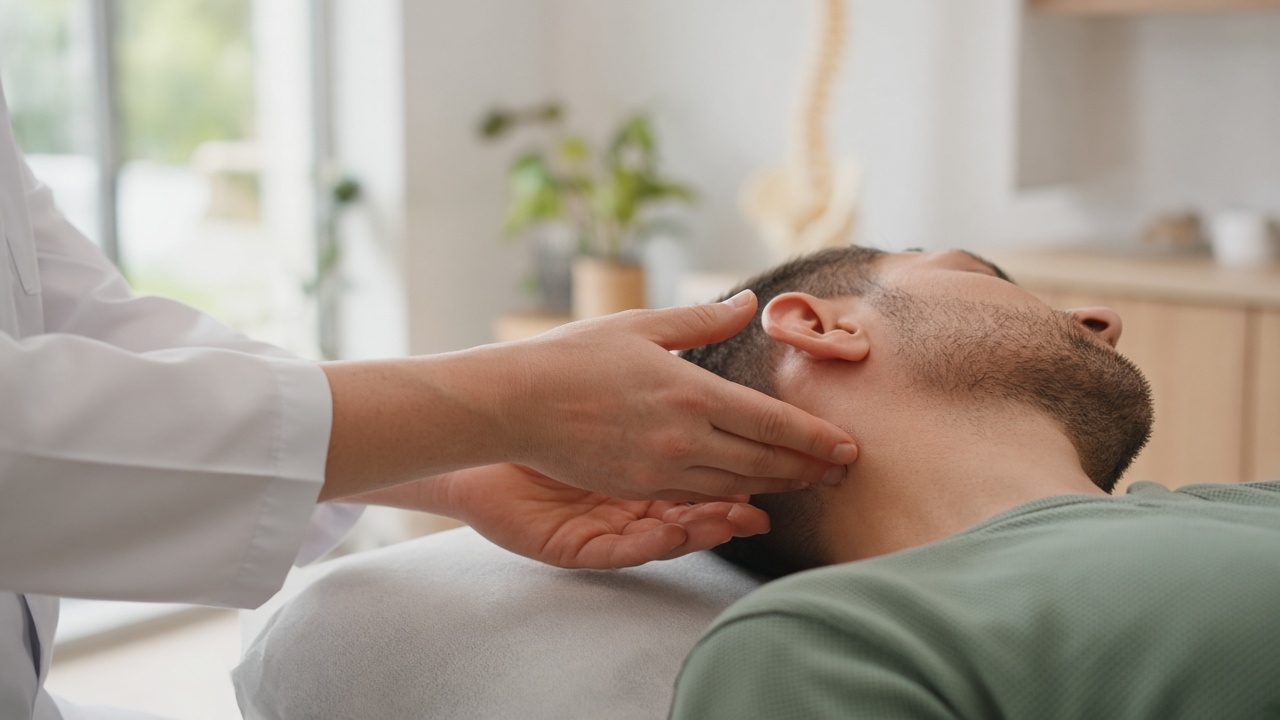
A physiotherapist explains what the jaw joint does, why it hurts, and what actually helps.
What is TMJ? TMJ stands for the temporomandibular joint, the hinge and sliding joint that connects your lower jaw to your skull, just in front of each ear. People also use "TMJ" as shorthand for TMJ disorders (TMD), a group of conditions that cause jaw pain, clicking and stiff jaw movement.
If your jaw aches when you chew, clicks when you yawn, or feels tight when you wake up, you are not alone. Jaw pain is a common reason people visit our physiotherapy clinic in Burnaby, near Brentwood. This guide explains what the joint does, the most common TMJ symptoms and causes, and which treatments tend to help.
What Is TMJ? The Joint vs the Disorder
TMJ is the name of the joint. TMD, or TMJ disorder, is the name for problems with that joint and the muscles around it. In everyday speech, most people say "TMJ" for both.
What the temporomandibular joint does
You have two temporomandibular joints, one on each side, just in front of your ears. Each one is where the rounded top of your lower jaw (the mandibular condyle) meets the temporal bone of the skull. A small cushion of cartilage called the articular disc sits between the two bones and helps the joint glide smoothly.
The joint does more than open and close. It also slides forward and moves side to side. That mix of hinge and glide is what lets you talk, chew, yawn and swallow. Chewing muscles power these movements, including the masseter at the angle of the jaw and the temporalis at the temple.
TMJ vs TMD: what the terms mean
So what is TMJ disorder, exactly? It is not one single condition. MedlinePlus describes TMD as a group of more than 30 conditions that cause pain and dysfunction in the jaw joint and the muscles that control jaw movement.
In short, TMJ is the joint and TMD is the problem. You may also see TMJ dysfunction or TMJ syndrome; they mean the same group of jaw problems.
Common TMJ Symptoms
The most common TMJ symptoms are jaw pain, pain in front of the ear, and jaw sounds or stiffness when you move your mouth. Symptoms can be on one side or both, and they often come and go.
Look out for:
- Pain or tenderness in the jaw, especially when chewing
- Aching pain in or in front of the ear
- Clicking, popping or grating sounds when you open or close your mouth
- A jaw that locks, catches, or gets stuck open or closed
- Trouble opening your mouth fully
- Headaches, often around the temples
- A feeling of fullness in the ear, or ringing in the ears (tinnitus)
- A bite that suddenly feels "off" or uneven
- Pain that spreads to the face, neck or shoulders
What is TMJ pain like? Many people describe a dull ache around the jaw and ear that gets worse with chewing, talking for a long time, or clenching. Some people notice it most in the morning, which can point to night-time clenching or grinding.
Is clicking without pain a problem?
Jaw clicking on its own is usually not a cause for concern. MedlinePlus notes that clicking or popping without pain is common and is not a sign of TMD on its own.
In our experience, the things that matter more are pain, locking, and losing how wide you can open. If your jaw clicks but feels fine and moves freely, keeping an eye on it is usually reasonable. If clicking starts with new pain or catching, it is worth getting checked.
What Causes TMJ Disorders?
There is often no single cause of TMJ disorders. An injury can trigger one, but in most cases the cause is not known, and factors such as stress and genetics may play a role.
Common TMJ causes and contributing factors include:
- Clenching and grinding (bruxism). This can happen during the day or at night, often without you knowing.
- Stress. Stress can increase muscle tension and clenching habits.
- Injury. A blow to the jaw, head or neck, including whiplash from a car accident.
- Arthritis. Osteoarthritis or rheumatoid arthritis can affect the joint.
- Disc problems. The disc may shift out of its usual position, which can cause clicking or locking.
- Neck tension. Neck stiffness may add load to the jaw muscles, though the evidence on posture is mixed.
- Habits. Chewing gum often, biting nails or pens, or resting your chin on your hand.
In your own case, it is usually a combination, so a good assessment looks at all of these, not just the joint.
Muscle vs joint vs both
Clinicians often sort TMD into broad groups. MedlinePlus lists three main types: disorders of the jaw joints (such as disc displacement or arthritis), disorders of the chewing muscles, and headaches from a TMD. Some people have more than one.
Knowing which group you fit helps guide treatment. Tight, sore muscles respond to different care than a disc that catches.
How TMJ Connects to Headaches and Neck Pain
TMJ problems can cause headaches and neck pain because the jaw, head and neck work as one system. Headache is a commonly reported TMD symptom, often felt at the temples and made worse by chewing or clenching.
So what is a TMJ headache? It is usually a tension-type ache over the temples or sides of the head that flares with jaw use. The temporalis muscle sits right there, so a tired, overworked chewing muscle can feel like a headache.
The upper neck matters too. The upper neck and jaw share nerve connections, so neck stiffness may feed jaw pain and the other way around. That is why we screen the neck when someone comes in with jaw pain.
Quick Self-Check: Signs It May Be Your Jaw
This checklist is not a diagnosis. It can help you decide whether your symptoms might be jaw related and worth a proper assessment.
Ask yourself:
- Does your jaw or the area in front of your ear hurt when you chew?
- Can you open your mouth less than usual, or does it zigzag as it opens?
- Do you wake up with a tight, tired jaw or a temple headache?
- Have you noticed clenching during the day, or has anyone heard you grinding at night?
- Does your jaw click and also hurt or catch?
- Does your ear feel full even though your ears have been checked and are clear?
If you answered yes to several of these, your jaw may be part of the picture. A physiotherapist, dentist or doctor can confirm what is going on.
TMJ Treatment Options
For many people, TMJ symptoms are temporary and improve with simple, conservative care, and NIDCR advises trying reversible treatments first. These include self-care, physiotherapy and, for some people, a dental splint.
Self-care first
Self-care is the first step for most people. Common advice includes:
- Eat softer foods during flare-ups and cut food into small pieces
- Use heat or a cold pack on the sore area
- Avoid chewing gum and very wide yawns
- Notice your jaw rest position: lips together, teeth apart, tongue resting on the roof of your mouth
- Find ways to manage stress
Gentle movement also helps many people. Try our guide to TMJ exercises you can do at home for a simple routine.

Physiotherapy
Physiotherapy is a common conservative treatment for TMJ disorders. A physio looks at how your jaw moves, how your neck and posture affect it, and which muscles are overworking. Treatment often combines hands-on care, exercise and education. MedlinePlus lists physical therapy among the options when self-care is not enough.
At a TMJ physiotherapy assessment, we typically check:
- How wide you can open, and whether the jaw drifts to one side
- Clicking, catching or locking
- Tenderness in the masseter, temporalis and neck muscles
- Neck movement and posture
- Habits such as clenching, and what makes your pain better or worse
From there, treatment may include manual therapy for the jaw and neck muscles, specific jaw and neck exercises, and a plan for habits and flare-ups. You can learn more about how we approach TMJ physiotherapy at our clinic.
Jaw pain getting in the way of eating or sleeping? Book a TMJ assessment with one of our physiotherapists. Book Now
Dental splints, medication, Botox and surgery
Other treatments exist, and they suit different situations:
- Splints or night guards. A dentist can make a mouth guard to protect teeth from night-time grinding. MedlinePlus notes there is not much evidence that they improve TMD pain, and they should not permanently change your bite.
- Medication. Over-the-counter pain relievers such as ibuprofen may help during flares. Ask your doctor or pharmacist.
- Botox injections. These are sometimes used for jaw muscle pain, but NIDCR notes that evidence for many TMD treatments is still limited.
- Surgery. Surgery is rarely needed and is generally considered only after conservative care has not worked.
Can TMJ be cured permanently?
There is no guaranteed permanent cure for TMJ disorders. The good news is that many cases settle on their own or with simple treatment, and for many people symptoms become mild and manageable.
So if you want to know how to cure TMJ permanently, a more useful goal is long-term control: know your triggers, keep the jaw and neck moving well, and have a plan for flare-ups. Be cautious of any treatment that promises a quick, permanent fix.
When to See a Professional
See a professional if jaw pain lasts more than a few weeks, keeps coming back, or makes it hard to eat, talk or sleep.
It is also worth getting checked if:
- Your jaw locks open or closed
- You cannot open your mouth as wide as usual
- Symptoms started after a fall, sports injury or car accident
- Self-care has not helped after a couple of weeks
See a doctor or dentist promptly, rather than a physio first, if you have swelling of the face or jaw, fever, numbness, a sudden change in how your teeth fit together, or pain after a significant injury.
FAQ
What does TMJ stand for?
TMJ stands for temporomandibular joint. It is the joint that connects your lower jaw to your skull, just in front of each ear.
Is TMJ the same as TMD?
Not exactly. TMJ is the joint, and TMD (temporomandibular disorder) is the group of conditions that cause pain and dysfunction in that joint and its muscles. Many people use TMJ to mean both.
Can TMJ go away on its own?
Often, yes. Many TMJ disorders last only a short time and go away on their own or with simple self-care. If symptoms last longer or keep returning, an assessment can help.
Can TMJ cause headaches or ear pain?
Yes, it can. TMJ disorders can cause aching around the ear, a feeling of ear fullness, and headaches around the temples. It is still a good idea to have ear symptoms checked by a doctor.
Can a physiotherapist treat TMJ, or do I need a dentist?
Both can help, and they often work together. A physiotherapist treats the jaw muscles, joint movement, neck and habits, while a dentist can assess your teeth and bite and make a splint if needed.
Is jaw clicking a sign of TMJ disorder?
Not on its own. Clicking without pain is common and is not a sign of TMD by itself. Clicking with pain, catching or reduced opening is worth having assessed.
Is TMJ physiotherapy covered by extended health benefits?
Many extended health plans cover physiotherapy, but coverage depends on your plan. BLVD offers direct billing for physiotherapy, so you may not need to pay up front and claim it later. Check with your provider to see what your plan includes.
Book a TMJ Assessment
If jaw pain, clicking or tension headaches are wearing you down, our physiotherapists can help you find out what is driving it and build a plan that fits your life. Our Burnaby clinic is near Brentwood.
A TMJ initial assessment is $155, and follow-up visits are $120.
References
- Temporomandibular Disorders (TMD), National Institute of Dental and Craniofacial Research (NIDCR)
- Temporomandibular Disorders, MedlinePlus, U.S. National Library of Medicine
- Temporomandibular Disorders (TMD), Cleveland Clinic
- Temporomandibular disorder (TMD), NHS
- Temporomandibular joint (TMJ) dysfunction, healthdirect Australia

Book your visit at BLVD
Physio, chiro, massage and acupuncture in Burnaby.
4279 Dawson St #301, Burnaby. 5 min walk from Gilmore Station.
